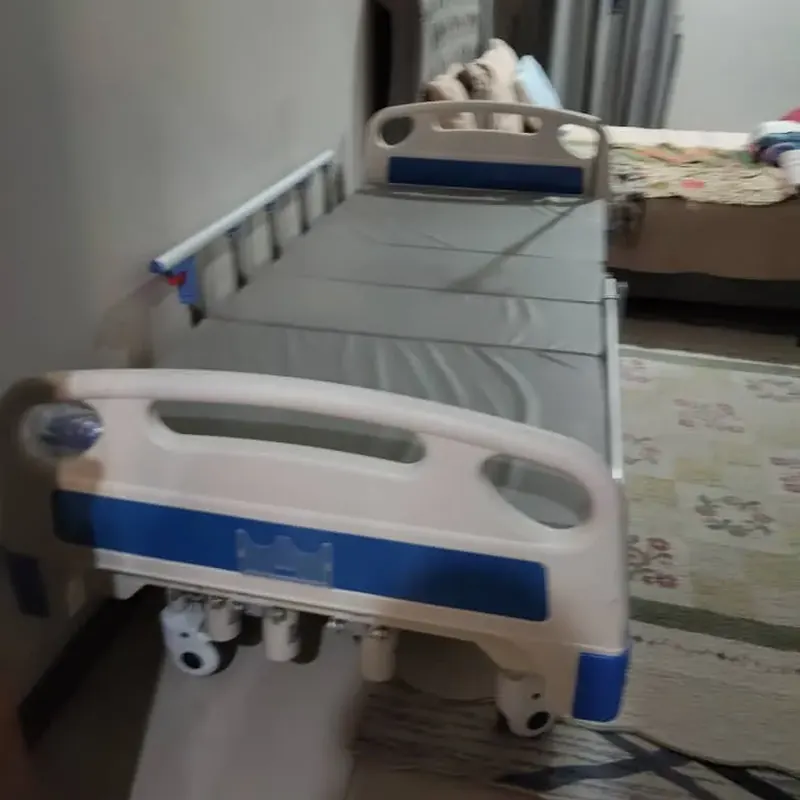
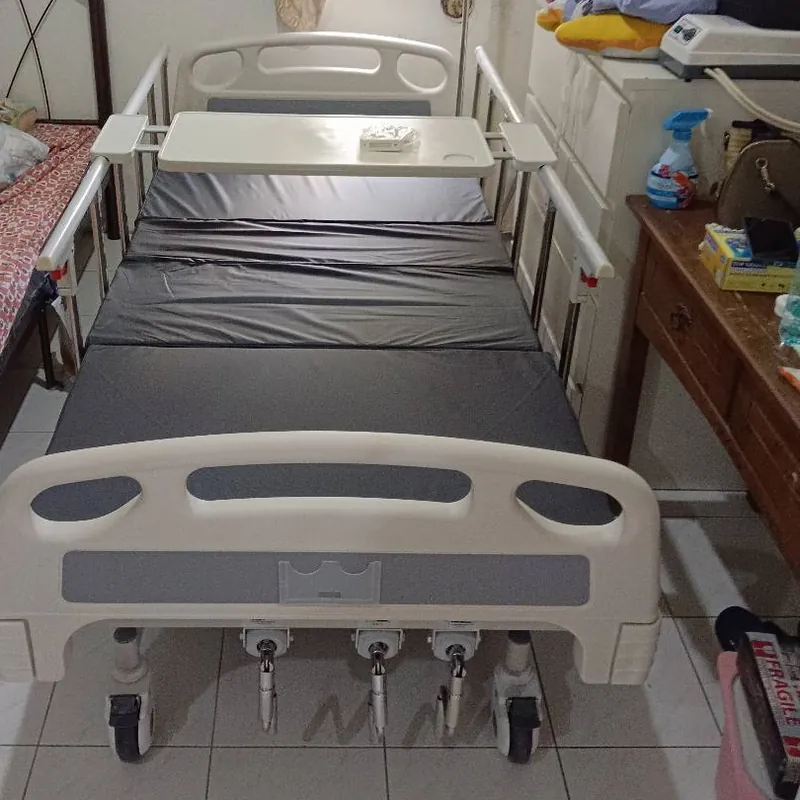
When a regular bed stops working
Many older people manage well in their own bed. The signs that a hospital bed may help are practical ones:
- Getting from lying to sitting needs help, or takes several attempts.
- The person spends most of the day in bed, or eats and takes medicine there.
- A carer is bending low over the bed to wash, change or turn them.
- They slide down the bed, or need a pile of pillows to breathe or eat comfortably.
- Moving from the bed to a chair, commode or wheelchair is unsafe at the current bed height.
- A doctor or therapist has advised regular repositioning because of the risk of pressure injuries.
If none of these apply, a regular bed with good lighting and a clear path to the toilet may be enough. Hospital bed vs regular bed (in Malay) compares the two in more detail.
Six things to check before choosing
Mobility and transfers
Note whether the person can change position, sit up, stand or transfer on their own. If they need physical help, ask a physiotherapist or occupational therapist to assess them.
Understanding and controls
Check understanding, eyesight, grip and coordination. An electric hand control does not make unsupervised use safe for everyone.
Fall risk
Look at past falls, medicines, balance, lighting, the route to the toilet and night-time habits. Falls are prevented by a plan, not by one feature of a bed.
Side rails
Rails can add a risk of entrapment or of climbing over. Check the person, bed, mattress, gaps and accessories as one system.
Skin and mattress
Choose the mattress from a pressure-injury risk assessment. An air mattress does not replace skin checks or a repositioning plan.
Home and carer
Measure doors, the route in, the room, sockets and transfer space. Make sure the carer can operate the bed safely.
Bed height matters more than the number of functions
For an older person, the most useful adjustment is often height. Low, so they can sit on the edge with their feet flat on the floor to stand up or transfer. High, so the carer is not bending over during washing and changing. A fixed-height bed is a compromise between the two.
The Standard 2 Function is fixed at 50 cm. The Flexi 3 Function adjusts from 40 cm to 65 cm with a crank, and the 3 Function Auto adjusts its height with a motor. Sizes and room planning are on hospital bed dimensions.
Our four beds for elderly care
| Model | Rent / month | Buy | What to check |
|---|---|---|---|
| Standard 2 Function Manual (M15) | RM150 | RM799 | Crank effort for backrest and knee; height fixed at 50 cm |
| Flexi 3 Function Manual (M08) | RM250 | RM1,349 | Height range of 40–65 cm by crank |
| 3 Function Auto (M10) | RM450 | RM2,799 | Hand control, socket position and what happens in a power cut |
| Ultra 6 Function Electric with Hi-Lo (M40) | Not rented | RM5,500 | Whether the care plan actually needs its tilt positions |
The rental deposit is RM0 for every duration, including one month. A mattress, rails, accessories, delivery and setup are included only when the written quotation lists them. A new bed carries a 365-day warranty under the scope written on the invoice. The motorised models are covered in electric hospital beds.
Side rails and falls: use the official guidance
NICE NG249 sets out when an older person should have a comprehensive falls assessment, covering individual and home factors. MHRA guidance explains entrapment, climbing and mismatched rails. Rails do not need to go up automatically at night; use them when an individual assessment supports it and the bed, mattress and rails fit together.
For pressure injuries, NICE CG179 recommends risk assessment, skin checks, a repositioning plan and a pressure-redistributing surface suited to the person. See bedsore care at home and hospital bed mattresses.
Help with costs
JKM’s Bantuan Warga Emas (BWE) pays RM600 a month, according to MyGOV (updated 13 March 2026). It is for Malaysian citizens living in Malaysia, aged 60 and above, whose household income does not exceed the current hardcore poverty line income (PGK tegar), and not for people living in a JKM-run institution or a care centre that receives a ration grant and gives free care. Full criteria and how to apply are in our Bantuan Warga Emas guide (in Malay).
Weighing up care at home against a registered care centre? See home care or care centre (in Malay).
Questions about beds for elderly people
Does an elderly person need a hospital bed?
Not always. Consider one when an assessment shows a need for a raised backrest, adjustable height, regular repositioning or carer access from the side. Age alone is not the reason.
What is the best bed height for an elderly person?
Low enough to sit on the edge with the feet flat on the floor for standing and transfers, and high enough during care that the carer is not bending over. An adjustable-height bed can do both; ask a therapist to check transfers at the height you choose.
Should bed rails always be used for elderly people?
No. Use rails only when an individual assessment supports them and the bed, mattress and rails are compatible. Rails can add risks of entrapment and climbing.
Can I rent a hospital bed for an elderly parent for a short time?
Yes. Rental starts from RM150 a month with an RM0 deposit, and one-month rentals are available. Payment is collected after delivery and setup.
Is there government help for elderly care costs?
JKM’s Bantuan Warga Emas pays RM600 a month to eligible citizens aged 60 and above whose household income does not exceed the hardcore poverty line income (MyGOV, updated 13 March 2026). It is a monthly cash aid, not a hospital bed scheme.
Sources
- NICE NG249: falls assessment and prevention.
- NICE CG179: pressure ulcers, prevention and management.
- MHRA / GOV.UK: bed rails management and safe use.
- MyGOV: Bantuan Warga Emas (BWE).
- Verified fact registry — prices, deposit, payment terms and warranty.
This guide explains how to choose equipment. It is not a diagnosis or a prescription; positioning, transfers and rail use should follow an individual assessment by a health professional. The Malay version is katil hospital untuk warga emas.