What a bedsore is, and where it starts
When someone lies or sits in one position, their body weight presses the skin against bone. If that pressure is not relieved, the skin and the tissue underneath lose blood supply and start to break down. Sliding down the bed or being dragged across sheets adds shear, which makes the damage worse.
The areas most at risk are where bone sits close to the skin:
- Lying on the back: tailbone (sacrum), heels, shoulder blades, back of the head.
- Lying on the side: hips, the outer knee and ankle, the ear and shoulder.
- Sitting for long periods: the buttocks and the lower spine.
Who is most at risk
- People who cannot change position on their own, for example after a stroke, surgery or a fracture.
- Older adults with thin, fragile skin.
- People with reduced sensation, who cannot feel discomfort building up.
- People who are incontinent, because moisture weakens the skin.
- People who are not eating or drinking well.
- Anyone who has had a pressure injury before.
Prevention at home: the five parts of a plan
NICE guideline CG179 describes prevention as an individual plan built on a risk assessment, not a fixed routine copied from elsewhere. In practice, families usually need these five parts:
- Repositioning. Ask the nurse or doctor how often the person should be turned, which positions to use and how to move them without dragging. Write it down.
- Daily skin checks. Look at the at-risk areas every day, in good light. Note any redness, warmth, hardness, blisters or broken skin.
- Clean, dry skin. Change wet pads or nappies promptly and keep skin clean without harsh rubbing.
- Food and fluids. Poor nutrition slows healing and raises risk. Ask the care team what the person can safely eat and drink, especially if they have swallowing problems or fluid limits.
- The right surface. The mattress and bed should match the person's risk, weight and the way they are cared for.
Mattresses and beds: what actually helps
| Equipment | What it does | Our price |
|---|---|---|
| High-specification foam mattress | Spreads pressure over a larger area. NICE CG179 describes it as the starting surface for adults at high risk in community care. | Not a listed product; ask your care team |
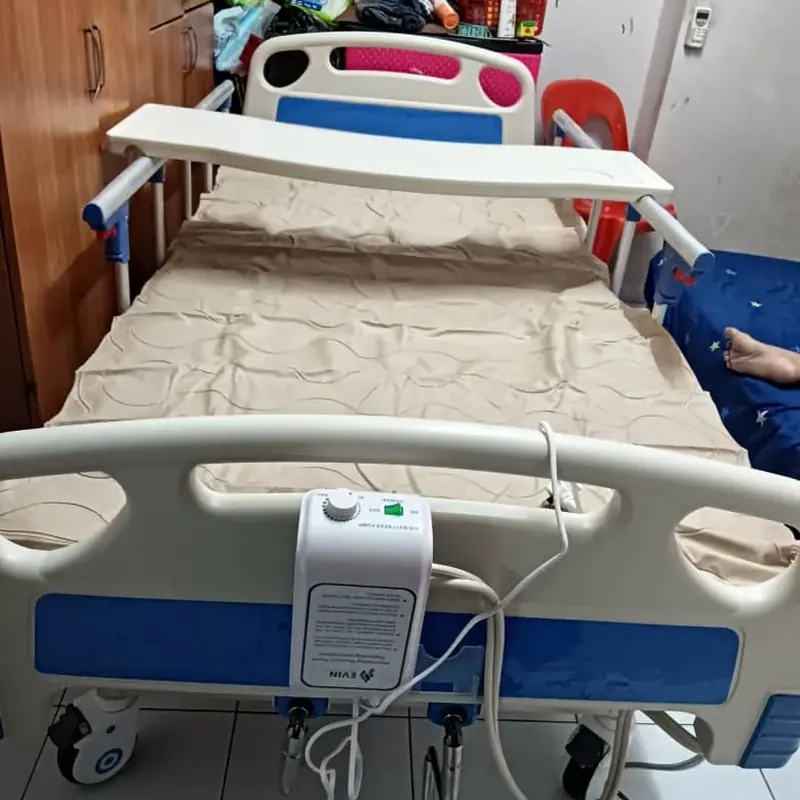
| Ripple (alternating-pressure) mattress | Air cells inflate and deflate in turn, so the areas under pressure keep changing. Used where the care team judges a dynamic surface is needed. | RM199 to buy |
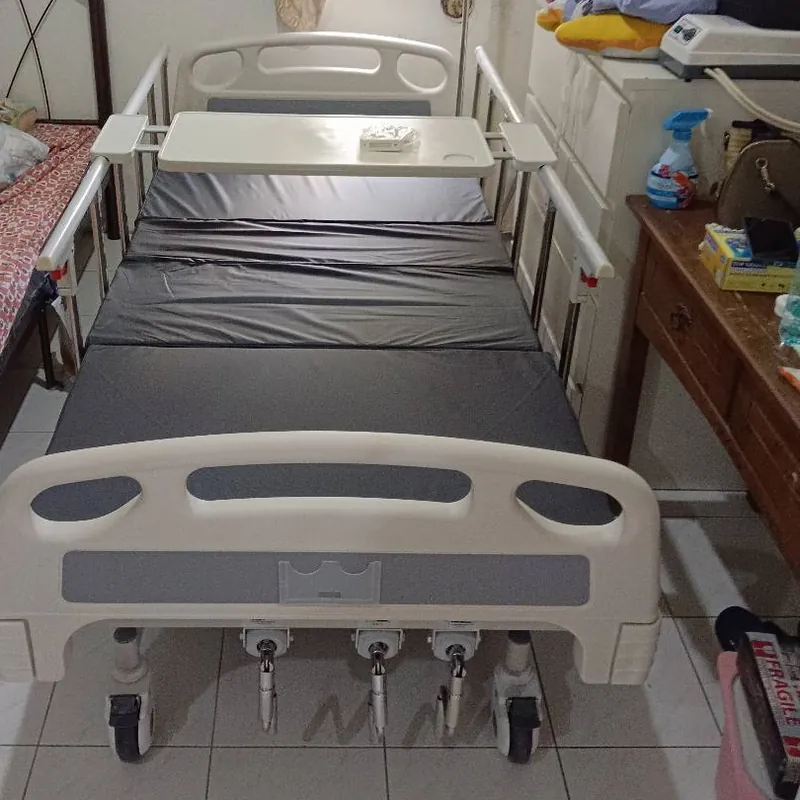
| Hospital bed with height adjustment | Makes repositioning and skin checks easier for the carer and reduces dragging. It does not relieve pressure by itself. | Rent from RM150/month |
No mattress guarantees that a bedsore will not form. Even on a ripple mattress, the person still needs repositioning and skin checks. Check the rail height again once an air mattress is inflated; MHRA guidance explains how active mattresses change gaps and effective rail height. More detail is on our ripple mattress and hospital bed mattress pages.
When to stop and get medical help
Getting the equipment quickly
Many families need equipment for a few weeks after a hospital stay. In our 642 completed hospital-bed rentals from 1 March 2025 to 26 April 2026, the median rental lasted 31 days. Hospital beds rent from RM150 a month with an RM0 deposit, including one-month rentals, and payment is collected after the bed is delivered and set up. A ripple mattress is a separate RM199 item. See hospital bed rental or branches and delivery near you.
Bedsore questions
What is a bedsore?
A bedsore, also called a pressure sore, pressure ulcer or pressure injury, is damage to the skin and the tissue underneath caused by pressure, or pressure combined with shear, usually over a bony area such as the tailbone, hips or heels.
How often should a bedbound person be repositioned?
There is no single interval for everyone. The frequency should be set and written down by the care team after assessing the person's risk, skin, mobility and comfort, and reviewed when their condition changes.
Does a ripple mattress prevent bedsores?
No mattress guarantees that skin will not break down. A dynamic surface such as a ripple mattress redistributes pressure and may be recommended for people at higher risk, but repositioning, skin checks, moisture care and nutrition still matter.
Which cream is best for a bedsore?
Do not choose a wound product from the internet. Broken skin or an open wound needs assessment by a doctor or nurse, who decides how it should be cleaned and dressed.
When should I see a doctor about a bedsore?
Seek clinical advice for redness that does not fade, broken or blistered skin, an open wound, a bad smell, discharge, new pain, fever, or skin that looks dark or purple.
Sources and scope
- NICE CG179: Pressure ulcers, prevention and management.
- MHRA / GOV.UK: bed rails management and safe use.
- Verified fact registry — equipment prices, deposit and payment terms.
- Hospital bed rental duration — 642 completed rentals, median 31 days.
This page explains general prevention principles and equipment. It is not medical advice and does not replace an assessment by a doctor or nurse. A Malay version of this topic is cara elak kudis tekanan.